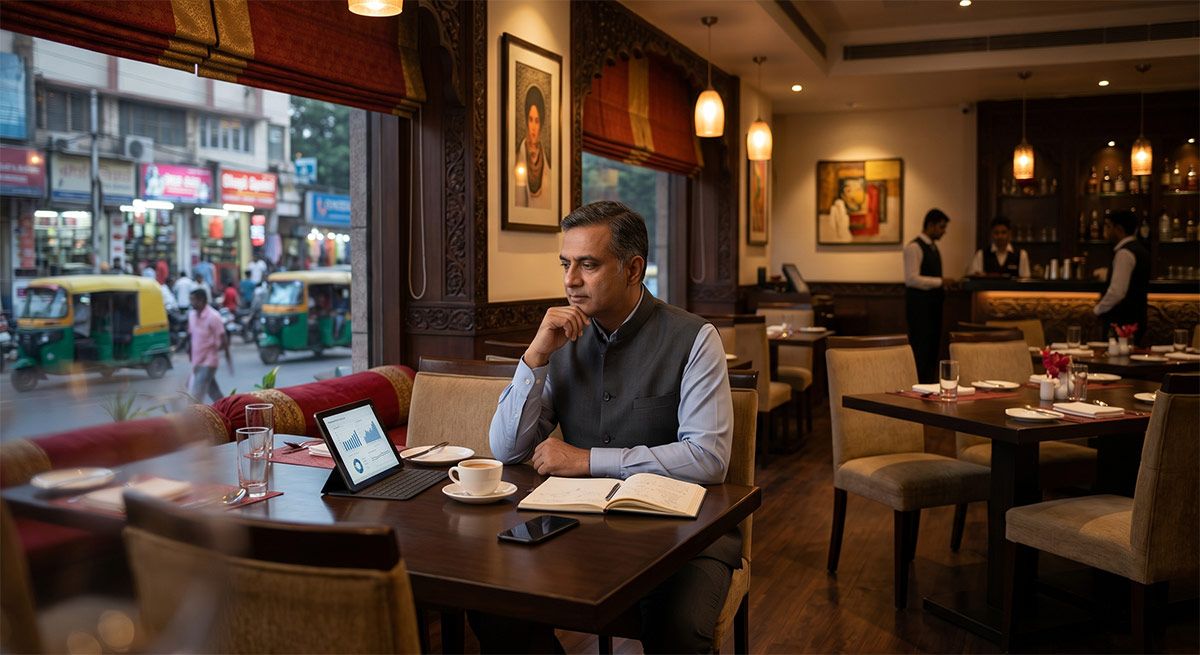
You’ve poured your heart, soul, and savings into your restaurant. The food is great, the ambiance is spot-on. Yet, evening after evening, you look out at empty tables. The buzz you dreamed of? It’s just not there. Sound familiar? I’ve sat across from countless restaurant owners like you, eyes tired, wondering where they went wrong. The truth is, you probably didn't do much wrong in the kitchen or with your decor. The problem isn't your biryani; it’s likely *how* you’re getting people to taste it. You're missing the boat on effective restaurant growth systems.
The Hard Truth: Your Customers Aren't Where You Think They Are
Let's be blunt. That prime location you paid top rupee for? It matters, yes. But it’s not enough anymore. Your customers aren't just walking by and peeking in. They're on their phones. All day. Every day. They’re scrolling Zomato, checking Swiggy, browsing Google Maps for "restaurants near me." They're asking friends on WhatsApp for recommendations. And if your restaurant isn't shining brightly in those digital spaces, you’re invisible. Period. This isn't just about 'marketing' anymore.** It's about building a robust **online presence for restaurants** that actually works. It's about more than just boosting a few posts; it’s about a complete strategy to **increase restaurant sales India.
Why Your Strategy Isn't Cutting It
You might be thinking, "But I'm on Zomato!" or "We post on Instagram sometimes." And that's exactly the issue. "Sometimes" doesn't cut it. * Reliance on Aggregators: You're paying huge commissions to Zomato and Swiggy, right? And what do you get? Orders, yes, but often *their* customers, not *yours*. You're building *their* business, not truly your own. * Passive Social Media: A few nice food photos are good. But are you actively engaging? Running targeted ads? Building a community? Or just shouting into the void? * Ignoring Local Search:** When someone searches for "best dosa in [your area]" on Google, do you pop up? With great reviews and tempting photos? Or are you buried under competitors? **Google My Business is FREE, yet so many ignore its power. * No Customer Retention Plan: What happens *after* someone dines with you or orders online? Do you have a way to get them back? Most don't, which is a massive missed opportunity for repeat business. You need more than just scattered efforts. You need cohesive digital marketing for restaurants that brings people through your physical and virtual doors consistently.
The Solution: Integrated Digital Growth Systems
This is where true restaurant growth systems come into play. Think of it like a well-oiled machine, not a collection of random tools. It’s about attracting new customers, converting them, and keeping them coming back, all driven by smart digital strategies. Here’s what I mean:
1. Own Your Digital Real Estate
Forget just being on Zomato. Take control. * Your Website is Your Home: A simple, mobile-friendly website with online ordering (direct, no commissions!) is non-negotiable. This is your chance for restaurant customer acquisition that builds your database.
* Google My Business (GMB) Mastery: Optimise your GMB profile like it's gold. Fresh photos, accurate hours, respond to every review (good or bad). This is ground zero for lead generation . People will search here first.
* Build Your Email & WhatsApp Lists: Collect customer data responsibly. Use it to send targeted promotions, new menu updates, or loyalty offers.
2. Smart, Targeted Restaurant Marketing India
No more blindly boosting posts. Every rupee spent on digital marketing for restaurants should have a purpose. * Hyperlocal Social Media Ads: Target people *living near your restaurant* who show interest in food, dining out, or specific cuisines. Show them exactly why they need to visit *your* place tonight. * Compelling Content: It's not just food photos. Share your story, behind-the-scenes glimpses, staff spotlights, customer testimonials. Make people *feel* something. * Influencer & Micro-influencer Collaborations: Partner with local food bloggers or Instagrammers who have genuine engagement in your area. An honest review from a local influencer can drive serious footfall.
3. Leverage Automation (Without Losing the Human Touch)
Imagine if someone orders from you online and automatically gets a "thank you" email with a small discount for their next visit. Or if a customer who hasn't visited in a month gets a gentle nudge about your new special. That's restaurant automation India working for you. * Automated Email/SMS Campaigns: Set up simple flows for new customers, inactive customers, or birthday wishes. * Online Reservation Systems: Make it incredibly easy for people to book a table directly from your website or social media. * CRM (Customer Relationship Management): Even a basic system helps you understand who your best customers are and how to keep them happy.
Stop Hoping, Start Growing
I’ve seen this work time and time again. Owners who were staring at empty tables now have reservations flooding in. Their phone rings with direct orders, not just aggregator pings. Their online reputation is sparkling. It's not magic; it's strategy.** It’s about implementing robust **restaurant growth systems that understand how today’s customer thinks and acts. You've built a great restaurant. Now, let's build an even greater customer base. Don't let your fantastic food remain a secret. It’s time to embrace digital, get those tables packed, and finally see the buzz you deserve. Ready to stop wondering and start seeing real growth? Let's talk about building a tailor-made digital growth system for your restaurant.Crushing Restaurant Profits? It's Your Menu! Secrets to Engineering an Indian Restaurant Menu That Sells You’re an Indian restaurant owner. You’re working insane hours. Your kitchen staff is busting their chops, churning out dish after dish. But when you look at the balance sheet, it just doesn't add up. Empty tables on a Tuesday, Zomato and Swiggy commissions eating your soul, and frankly, you’re exhausted. You see competitors thriving, packed houses, glowing Google Maps reviews. You scratch your head, "My food is good, maybe even better! What am I doing wrong?" Here’s the blunt truth, straight from someone who’s been in hundreds of restaurant kitchens across India: Your menu is probably crushing your profits, not boosting them. It's not just a list of dishes and prices. It's your most powerful, silent salesperson. And if it's not engineered right, it's just a fancy pamphlet costing you money.
Your Menu Isn't Working Hard Enough: The Real Problem
Think about it. Most Indian restaurant menus are a chaotic mess. Too many options, no clear stars, pricing that feels pulled from thin air, and descriptions that put people to sleep. Your customers – whether they’re dining in, or scrolling on Swiggy – are overwhelmed. They revert to their usual "safe" choices: Butter Chicken, Dal Makhani, Paneer Tikka. You sell a lot of these, sure, but are they your *most profitable* dishes? Often, they're not. They're your low-margin workhorses. You’re stuck in a loop. You keep pushing what sells, even if it barely breaks even, while your high-profit dishes sit there unloved, overlooked. This isn't just poor menu design India; it's a business fundamental you’re missing.
Why Your Menu Is Bleeding You Dry (And How to Fix It)
This isn’t about fancy graphics (though good design helps). This is about Indian restaurant menu engineering – a strategic science. It's about psychology, economics, and understanding what makes your customer tick. Let’s dive into how to turn that profit-killer into a money-making machine. 1. Stop Guessing, Start Analysing: Your Data is Gold First things first: you *must* know your numbers. Which dishes are actually selling? Which ones are high profit? Which ones are both? * Track Sales: Use your POS system. Don’t just look at total sales; break it down by dish. * Calculate Food Cost:** This is non-negotiable. For *every single dish*, know exactly what it costs you to make. Ingredient costs, portion sizes, everything. You cannot do proper **food cost control restaurant-wide if you don’t know this. * The Menu Matrix: Once you have sales volume and food cost, plot them. This is where you identify your: * Stars: High popularity, high profit. (Example: A unique regional specialty you make, that costs less to produce but customers love.) *Promote these like crazy!* * Plowhorses: High popularity, low profit. (Example: Your everyday Dal Fry.) *Don’t remove them, but consider minor price adjustments or upsell opportunities.* * Puzzles: Low popularity, high profit. (Example: An exotic biryani that’s delicious but overlooked.) *These are hidden gems! Give them prime real estate, better descriptions.* * Dogs: Low popularity, low profit. (Example: A forgotten side dish nobody orders.) *Cut these out without mercy. They just clutter your menu and inventory.* Insight:** Most owners focus on volume. **Smart owners focus on profit per dish. 2. Pricing Strategy India: It's Not Just About Competitors How do you price your dishes? If your answer is "I looked at the restaurant next door," you're making a huge mistake. Your restaurant pricing strategy India must be based on *your* costs, *your* value, and *your* target profit margin. * Cost-Plus Pricing: Basic, but essential. Cost of ingredients + desired profit margin. * Value-Based Pricing: What’s the perceived value to the customer? That Butter Chicken is popular; can you charge a tiny bit more without losing sales? * Anchor Pricing: Place a very high-priced item next to your desired high-profit item. The high-profit item suddenly looks more reasonable. * Avoid Rupee Signs (₹): Subtly, but effectively. It makes people focus on the money. Just list the number. 3. The Art of Menu Design India: Where Eyes Go, Money Flows This isn’t about being flashy. It’s about being strategic. Your effective menu layout guides the customer's eye. * The Golden Triangle: Studies show eyes often go to the top right, then center, then top left. Place your "Star" dishes here. * Limited Choices: Don't overwhelm. A smaller, curated menu with fewer items (around 7-10 per category) can actually boost restaurant sales. Too many choices paralyse customers. * White Space is Your Friend: Don't cram everything. Give dishes room to breathe. * Use Visuals (Wisely): High-quality photos of your *most profitable* dishes. Not every dish, just the ones you want to push. Make them mouth-watering. Opinion: Stop designing your menu like a newspaper. It’s a sales brochure for your best products. 4. Menu Psychology Indian Restaurant: Speak to the Stomach AND the Brain This is where you make people *want* what you *need* them to buy. * Descriptive Language: Don’t just say "Chicken Curry." Say "Slow-Cooked Punjabi Chicken Curry simmered in a rich tomato-onion gravy with aromatic spices." Use words that evoke taste, smell, and origin. * Highlighting Dishes:** Use boxes, different fonts, or bolding to draw attention to your **high-profit dishes menu. * Storytelling: A small anecdote about a dish's origin or family recipe can add perceived value. * The Decoy Effect: Introduce a slightly inferior or higher-priced option to make your target item look more appealing by comparison. Example: You have a "Paneer Butter Masala" (high profit) and a "Kadai Paneer" (mid profit). You also have a "Chef's Special Exotic Paneer Sizzler" (very high price, perhaps low sales). The Sizzler acts as a decoy, making the Paneer Butter Masala seem like great value. 5. Upselling & Cross-Selling: Maximise Every Order Your menu can do this even when your waitstaff can't. * "Pairing Suggestions": "Goes well with..." or "Chef Recommends..." for drinks, sides, or desserts right on the menu. * Combos & Platters: Offer Thalis or family platters that bundle popular (and profitable) items. * Daily Specials: Use a separate, small insert for daily specials. This highlights them and creates urgency. Make sure these are your high-profit "Puzzle" dishes you want to turn into "Stars."
Build Authority, Drive Profit
I’ve seen restaurants go from struggling to buzzing simply by overhauling their menu strategy. This isn't theoretical. It’s practical, hard-nosed work that directly impacts your bottom line. Your menu is more than just a list of food. It's a carefully orchestrated symphony designed to influence choice, increase average spend, and ultimately, put more money in your pocket. It's time to stop leaving it to chance. Are you ready to stop seeing your menu as an expense and start seeing it as your best sales tool? Ready to transform your restaurant's profitability? Let's talk about engineering an Indian restaurant menu that doesn't just list, but sells